

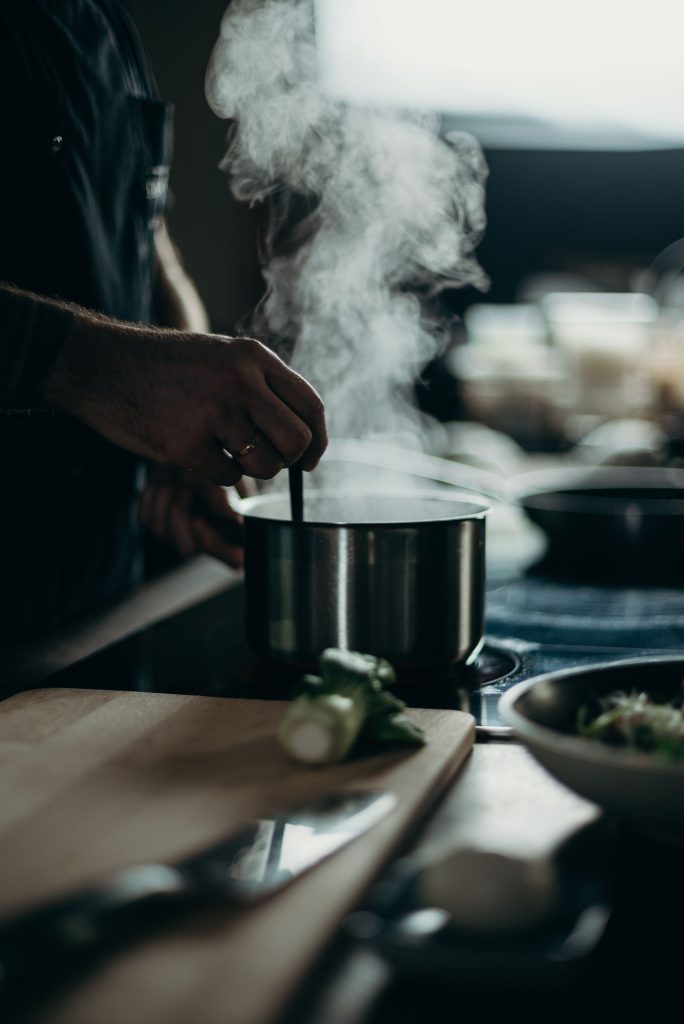
Why cooking smells travel so far
Cooking releases steam, and steam carries tiny droplets of fat and the aromatic compounds from your food into the air. Those droplets are sticky, so they land on surfaces, settle on fabric and creep into curtains, sofas and ceilings. That’s why you can still smell last night’s fish supper the next morning, even if the pan is clean.
Frying and grilling are the worst offenders, but spices, garlic and onions carry further than most people expect. The smell doesn’t stay in the kitchen. It travels through open doors and up the stairs, and it can soak into anything soft nearby.
Use the extraction properly
An extractor fan is only useful if it’s on. Switch it on before you start cooking, not once the kitchen is already full of steam, and leave it running for a few minutes after you’ve finished. If your cooker hood recirculates air rather than venting it outside, the charcoal filter needs changing regularly, or it won’t trap much at all.
Use the back burners where you can, put lids on pans and keep the kitchen door shut so the smell stays where it’s made. Crack a window if the weather allows, because fresh air helps carry the smell out rather than letting it settle.
Clean the parts that hold grease
Grease filters in cooker hoods can be washed in hot, soapy water or in the dishwasher if the manufacturer says it’s safe. A dirty filter is one of the main reasons a kitchen smells of fried food long after the cooking has finished. Wipe the front of the hood, the tiles behind the hob and the top of the cupboards, because grease builds up in all of these places.
Clean up the same day
Left overnight, splashes harden and smell more. Wipe the hob, the worktops and the front of the oven while they’re still warm, using a degreaser suited to the surface. Take the bin out after a fishy or greasy meal, and rinse the food waste container if you use one.
Check the curtains near the hob as well. They often hold more of the smell than you’d think, so give them a shake, and wash them if the care label allows.
Treat the room once it’s clean
Once the kitchen is clean and dry, use an odour neutraliser on the areas that still hold the smell. A light mist on the doorway, the curtains and any soft chairs close to the kitchen can make a real difference. D-ODR’s fine mist removes the odour molecules rather than adding a stronger scent, so you won’t end up with curry and lemon competing with each other.
Many people reach for a candle as soon as the pan is off the heat. That covers the smell for an evening but doesn’t remove it, and the candle adds its own soot to the room.
Quick habits that make a difference
- Run the extractor fan on the lowest setting for longer rather than the highest for a minute.
- Store leftovers in sealed containers, especially fish and strong cheese.
- Empty the bin before it fills, and keep it lidded.
- Give the fridge a wipe down once a week, and check behind the salad drawers.
Cooking smells are part of a home that’s being lived in, and they’re not a problem to get rid of entirely. But with a bit of extraction, quick cleaning and a targeted treatment afterwards, the kitchen won’t smell of dinner for the next three days.