

Why clean first?
Spraying a dirty chair is a bit like painting over a grubby wall. The mess is still there underneath, and it can trap the product on the surface. Dust, crumbs, skin oils and spilt drinks all hold smell, so if you skip the cleaning, you’re asking the spray to deal with more than it should.
A clean, dry surface is the best starting point. It gives the odour molecules less to hide behind, and it means you’re not sealing the smell in under a layer of grime.
Step one: vacuum thoroughly
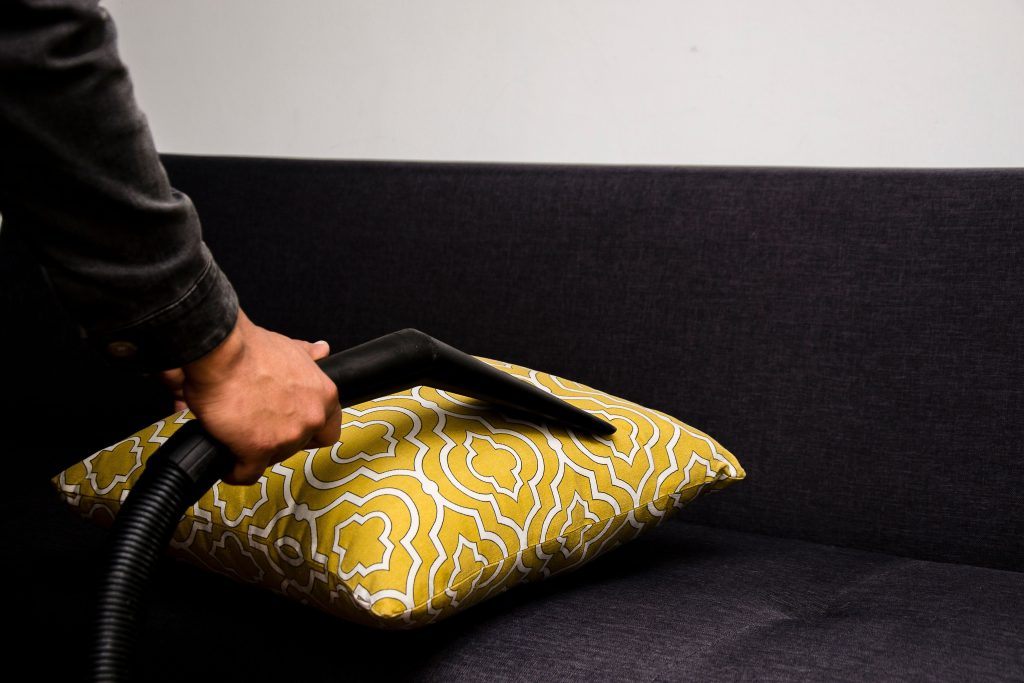
Use the upholstery attachment on your vacuum, and take your time. Work in one direction, following the grain of the fabric where you can. Dust and crumbs collect in the seams, under the cushions and in the gap between the arm and the seat, so give those spots extra attention.
A soft brush attachment helps lift dust out of textured fabrics like bouclé or chenille. It’s a small step, but it makes a difference to how clean the fabric feels afterwards.
Step two: check the fabric
Before you add any liquid, check the cleaning code. In the UK, furniture labels often use W for water based cleaners, S for solvent based, W/S for either, and X for vacuum only. Velvet and suede need a gentle hand, and leather isn’t fabric at all, so it needs a leather specific product. If you’re not sure, a dry clean and a good vacuum is always the safest first step.
Step three: spot clean
For marks and stains, use a cleaner suited to the fabric. Apply it to a cloth, dab the mark from the outside in, and avoid soaking the foam beneath. Pat with a dry cloth to lift the moisture, and don’t rub hard, because that can roughen the fibres.
Chairs with wooden frames can get damp around the joints. Dry those areas properly, especially on dining chairs, which often get splashes from food and drink.
Step four: let it dry
This is the step people rush. Give the upholstery time to dry fully, ideally with a window open and a fan pointing across the room. Fabric can feel dry on the surface while the padding is still damp, so press a dry tissue into the cushion to check before you go on.
Step five: treat with a neutraliser
Once the chair is clean and dry, give it a light, even mist of odour neutraliser. Keep the spray fine and don’t soak one spot. D-ODR’s fine mist removes the odour molecules rather than adding a stronger scent, so the chair ends up smelling of the flavour you picked, not of perfume layered over old smoke or cooking.
Test the spray on a hidden area of the fabric first, particularly if it’s a light colour, velvet or a delicate weave. Let the test patch dry before you judge the finish.
Extra tips for dining chairs and armchairs
- Use washable covers on dining chairs that get used every day.
- Vacuum the gap where the back meets the seat, because that’s where crumbs gather.
- Clean the legs and frame as well, since they pick up grease and dust.
- Give armchairs a quick vacuum each week, and a deeper clean every few months.
Keep the routine simple
Cleaning upholstery doesn’t need to be a big job. Vacuum regularly, spot clean as you go, let everything dry and then use a neutraliser when the fabric needs freshening. Do it in that order, and your chairs will smell like a room you want to sit in.