

Why offices smell
An office might look spotless, but it’s full of places where smell builds up. Shared kitchens get used for lunch every day, bins fill up quickly, and fabric chairs and carpets soak up whatever gets brought in on clothes and bags. Meeting rooms can hold stale air for hours if nobody opens a window. None of this is anyone’s fault in particular, but it adds up.
Smell also affects how people feel at work. A stuffy or unpleasant room can make a space less comfortable, and visitors notice straight away when they walk in.
Start with the kitchen
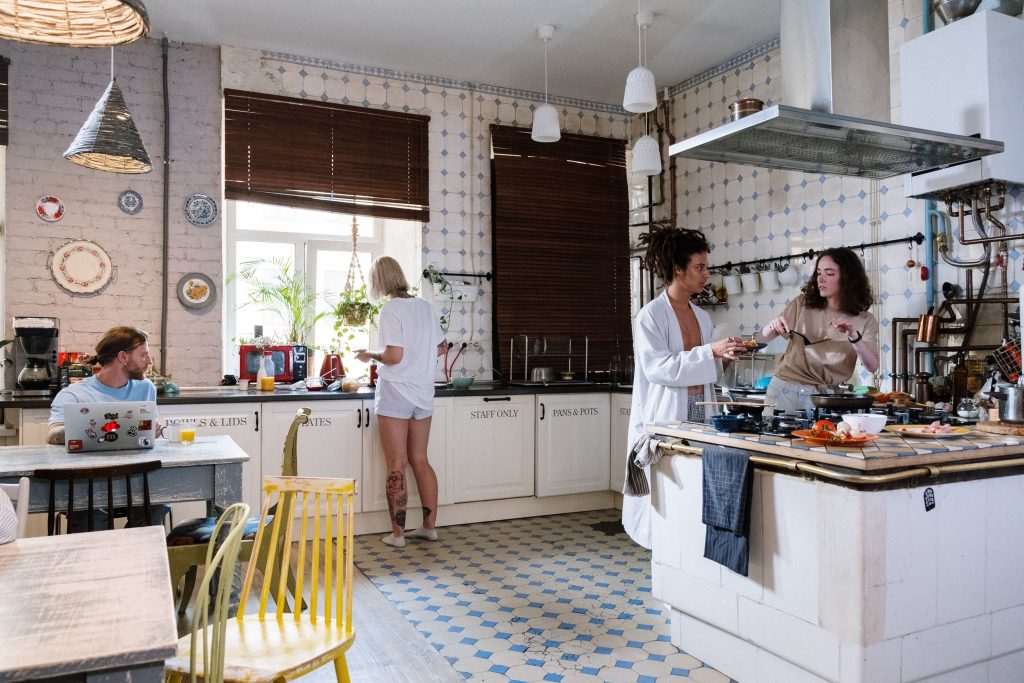
The shared kitchen is usually the biggest culprit. Reheated fish, fried food and strong curry leave their mark on the microwave, the sink and the fridge. A rota for cleaning the microwave and wiping down surfaces works well, and a visible reminder to take leftovers home can help too.
Check the sink drain and the dishcloths regularly. Drains are a common source of smell, and damp cloths left in a corner can start to smell within a day. Replace cloths often, and let them dry fully between uses.
Bins and general waste
Empty the bins at the end of each day, and use bags that seal. Keep the bins lidded, and wipe the inside once a week. If you have a food waste bin, empty it more often than the others, because food waste goes off quickly.
Carpets and fabric chairs
Fabric chairs, carpets and window blinds pick up dust and smell from everyone who uses them. Vacuum carpets regularly, and ask the cleaning contractor to deep clean them on a schedule. Vacuum the chairs too, especially the gap between the back and the seat, where crumbs and dust gather.
After a deep clean, a light treatment with an odour neutraliser can freshen the carpet and soft furnishings. Test it on a small area first, and keep the mist light so the carpet dries quickly. D-ODR’s fine mist is designed for targeted use like this, rather than for filling a whole office.
Meeting rooms and reception
Meeting rooms are easy to forget. Food and drink in a closed room, plus a day of people breathing, can leave the air heavy by the afternoon. Open the windows between meetings if you can, and clean up crumbs and spills straight away.
Reception is the first thing visitors notice. Keep the entrance mat clean, empty the bins and check the air near the door. A neutral, clean scent is far better than a heavy fragrance, which can bother people with allergies.
Ventilation matters
Many offices rely on ventilation systems that need regular maintenance. Ask whether the filters are changed on schedule, and whether the vents and grilles are cleaned. A blocked filter can let smells circulate around the building instead of clearing them.
Open windows when the weather allows, and make sure the extractor fans in the kitchen and toilets are working. Fresh air helps more than most people expect.
Keep staff involved
- Set up a simple cleaning rota for the kitchen and meeting rooms.
- Ask staff to report smells early, before they become a problem.
- Avoid strong perfumes and air fresheners, because some colleagues have sensitivities.
- Check the cleaning contractor’s schedule covers bins, carpets and vents.
A fresh office is a shared job
Keeping an office smelling good is less about one big clean and more about small habits. A tidy kitchen, empty bins, clean fabric and working ventilation make a real difference, and a neutraliser can finish the job after a deep clean. Everyone benefits when the place feels fresh.