

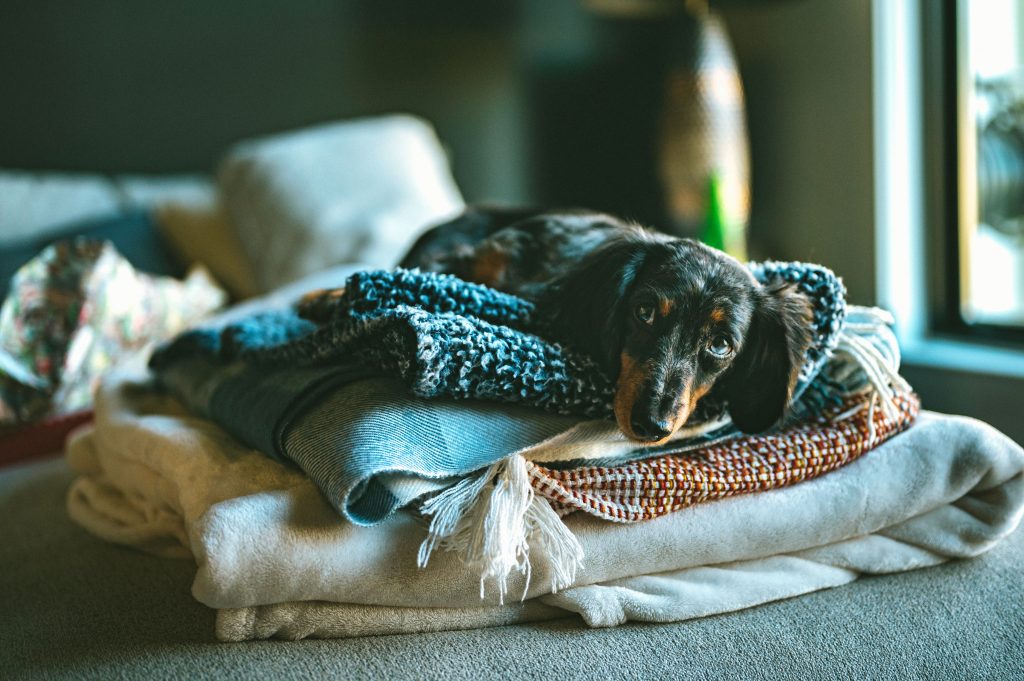
Why pet smells cling to fabric
Pets bring their smell with them in lots of ways. There’s the natural oil from fur, the dander that drops off skin, the odour from damp paws and, sometimes, the mess from an accident. The worst of it tends to sink into soft materials, where it gets trapped in the foam and backing, out of sight and out of reach of a quick wipe.
Urine is the hardest one to shift. It contains proteins and salts, and once it soaks through to the padding it can keep smelling for ages, especially when the weather is damp. A surface clean might look fine, but the smell is still underneath.
Wash what you can
Start with anything that can go in the washing machine. Pet beds, blankets, cushion covers and throws should be washed on the hottest setting the care label allows, using a detergent you trust. Add an extra rinse if your machine has one. Dry them completely, ideally outside or on a warm, well aired rack, because damp bedding is where smells come back.
Check the label before you wash, though. Some pet beds have a fabric that shrinks or a filling that doesn’t like heat.
Tackle urine stains properly
For urine on carpet, upholstery or a mattress, an enzyme cleaner is the best place to start. Enzyme cleaners contain enzymes that break down the proteins in urine rather than covering them, which is why they’re often recommended over ordinary cleaners. Follow the instructions on the bottle, and test it on a hidden spot first in case it affects the colour.
Blot up as much as you can before you start, then apply the cleaner generously so it reaches the padding. Leave it to work for the time the label recommends, then blot again and let the area dry thoroughly. Avoid using ammonia based cleaners, because the smell can attract pets back to the same spot.
Deal with the general pet smell
For the everyday smell that remains after washing and cleaning, a neutraliser is a good next step. Give the sofa, the armchair or the pet bed a light, even mist once it’s clean and dry. D-ODR removes the odour molecules rather than adding a stronger scent, so your dog’s bed doesn’t end up smelling like a perfume counter.
Don’t spray the pet directly, and keep them out of the room until the fabric is fully dry. Hold the bottle a short distance away and mist the fabric, not the animal.
Little habits that help
- Vacuum pet hair from sofas and beds at least once a week.
- Use washable covers on sofas and armchairs where your pet likes to lie.
- Keep a waterproof mat under food and water bowls.
- Air the room daily, especially in summer when smells build up faster.
When to ask the vet
If your pet keeps having accidents on the same spot, or if you notice a sudden change in toilet habits, have a chat with your vet. Accidents can be a sign of a health problem, and it’s much easier to sort out early than to spend months chasing the smell around the house.
Pet odour is manageable with a bit of routine. Clean the source, wash what you can, use an enzyme cleaner for the stains and then treat the fabric so it smells like your home, not like the pet.